
How to Search Civil Dockets
Use the Walker County courts hub to identify the office first. Superior and State civil matters belong in the Clerk of Superior Court ecosystem, with LMJC links, the county case-search route, and account-based PeachCourt access. Magistrate claims and dispossessory matters are maintained separately. Probate petitions go to Probate Court, and federal civil cases use PACER through the Northern District of Georgia.
An official case number is the best reference when available. The Walker clerk portal was not working during the research inspection, and its current fields could not be verified. Do not assume it supports every name, date, attorney, or filing filter. A calendar PDF can help identify a setting, but it cannot replace the full docket.
- Identify the filing type and the court that received it.
- Follow the official Walker or LMJC link to the county portal or PeachCourt.
- Match the case reference, court, party role, and filing date.
- Read the docket for pleadings, service, motions, orders, and judgment.
- Ask the maintaining clerk for missing items, inspection, or certification.
Walker Civil Cases Split Courts
Superior Court handles broad civil and domestic-relations work. Walker State Court has separate judicial and administrative functions, although the Clerk of Superior Court maintains both courts' files. Magistrate Court handles civil claims, garnishment and attachment within its stated authority, dispossessory and distress warrants, and related matters. Its county page says there are no jury trials there, and a written jury request can transfer a qualifying matter to Superior or State Court.
Probate handles estates, guardianships, conservatorships, and other probate matters. Juvenile proceedings carry special access limits. Municipal code cases stay with the relevant city, while federal civil cases for Walker fall within the Rome Division. A missing county-portal result often means the search began in the wrong system.
What a Civil Docket Shows
A civil docket is the event index for a case. It may list the complaint or petition, service, an answer, counterclaim, motion, hearing notice, order, judgment, and post-judgment event. The Walker civil-hearings report offers a narrower calendar schema: date, time, parties, case number, cause of action, attorneys, comments, and page. Those calendar fields identify a planned setting and broad category, not the full file or result.
| Case number | The court reference, displayed as a case number; no local pattern should be invented. |
|---|---|
| Parties | Participants and their roles, which may be sensitive in family matters. |
| Filings | A complaint, petition, answer, motion, service return, or order. |
| Setting | A planned hearing, conference, or trial date that may later move. |
| Judgment | A final action only when it has been officially entered. |
Decode Walker Civil Categories
The LMJC civil calendar uses labels such as General Tort, Real Property, Other General Civil, Divorce/Separate Maintenance, Paternity/Legitimation, Injunction/Mandamus/Writ, Modification-Domestic Relations, Family Violence Petition, Civil Appeal, Contempt-Domestic Relations, and Name Change. These labels help sort a calendar. They do not establish injury, ownership, misconduct, or another disputed fact.
“Cause of action” is the report's broad case category. “Comments” may be a scheduling note and can contain context that should not be copied casually. An attorney field identifies counsel shown for that setting, not necessarily every lawyer who has appeared. Read the docket and orders before drawing a conclusion from a calendar label.
Types of Civil Cases on the Docket
Walker civil work spans several courts. Classification controls both the search route and the office that can provide a copy.
- Superior general civil, property, tort, writ, appeal, and domestic-relations cases
- State Court civil matters within that court's jurisdiction
- Magistrate claims up to the stated $15,000 limit, garnishment, attachment, and dispossessory work
- Probate estates, guardianships, conservatorships, and related petitions
- Municipal code cases, restricted Juvenile proceedings, and separate federal civil cases
A dispossessory should not be assumed to appear in a Superior search. A marriage-certificate ordering service is not a probate docket. Likewise, a municipal payment page does not prove that civil records are searchable there.
PeachCourt Filing Is Not Access
Georgia Courts lists PeachCourt as the mandatory e-filing provider for Walker Superior and State Courts. E-filing describes how documents are submitted. It does not guarantee a free public search or immediate access to every image. A filing can be under review, redacted, sealed, restricted, or visible only through an account.
Use PeachCourt's official access page with that limit in mind. For a missing entry, ask the clerk whether the filing was accepted and whether it may be inspected. Never infer that a case does not exist merely because an account screen or county wrapper fails.
Settings and Hearings on Civil Dockets
Date and time fields are settings, not outcomes. A civil hearing can address a motion, status issue, domestic matter, or another request and may not be a trial. A jury-trial label describes the planned session, not whether a jury was impaneled or a verdict entered. Continuances, cancellations, and later orders can change what an earlier PDF shows.
Check the current LMJC calendar page, then compare it with the docket and latest notice. For a time-sensitive appearance, confirm with the Clerk of Superior Court at 706-638-1742 or the correct administrator. Calendar questions may go to an administrator, while certified copies belong with the clerk. The Walker County court calendar explains the setting labels in more detail.
Walker Family Calendars Need Care
LMJC publishes forms for divorce, modification, contempt, name change, financial affidavits, child support, service, and final decrees. These forms show how much detail may sit behind a short docket event. A child-support addendum can contain income, child, insurance, parenting-day, deviation, arrearage, and deduction fields. A divorce reporting form can contain residence, birth, marriage, grounds, and child information.
The docket entry and the filled form are different records. Family-violence and domestic-relations categories can expose sensitive context even when an image is restricted. Use neutral verbs such as “filed,” “listed,” or “scheduled.” Do not turn a category into an allegation or finding.
Public Access to Civil Dockets
Many Georgia court records are open subject to rules and orders, but access is not absolute. Sealed portions, juvenile records, protected identifiers, financial material, and some family documents may be withheld or redacted. A calendar line can be visible while the filing behind it remains unavailable.
Key access rules:
Uniform Superior Court Rule 21 governs courthouse inspection, copying, and limits.
Georgia Attorney General Opinion 95-8 explains the juvenile-court-order boundary.
Georgia Open Government FAQ covers exemptions and administrative-record fees without overriding court orders.
For Superior or State records, visit or mail the clerk at 103 South Duke Street, P.O. Box 1125, LaFayette, GA 30728. The listed hours are 9:00 a.m. to 5:00 p.m. weekdays, with phone 706-638-1742 and fax 706-638-1779. Ask about inspection, plain or certified copies, current charges, payment, and postage. The county Open Records portal is for county-held administrative material, not a way around sealing.
City Portals Are Narrow Tools
The LaFayette online-services page presented property-tax and utility services during inspection, not a civil docket search.
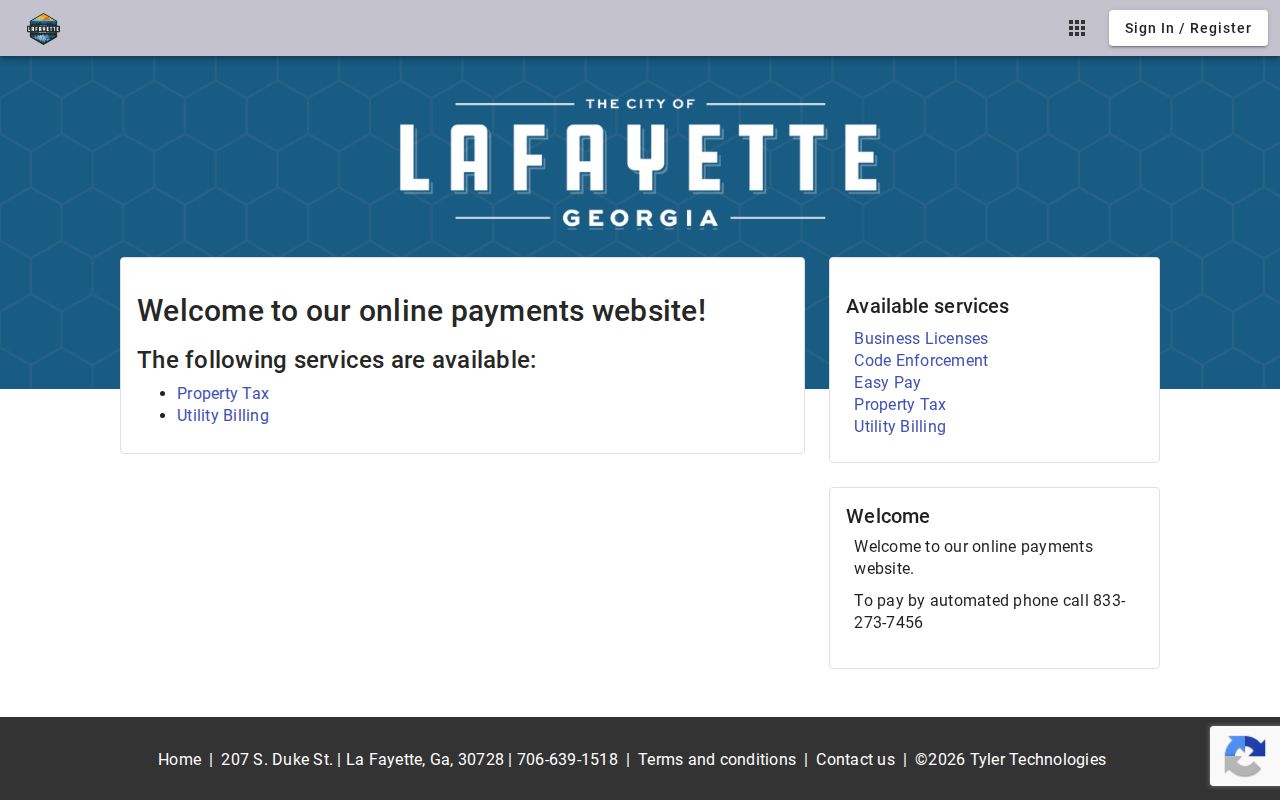
That screen should not be treated as proof that county civil files are online.
Rossville's official pages link to the nCourt payment landing page.
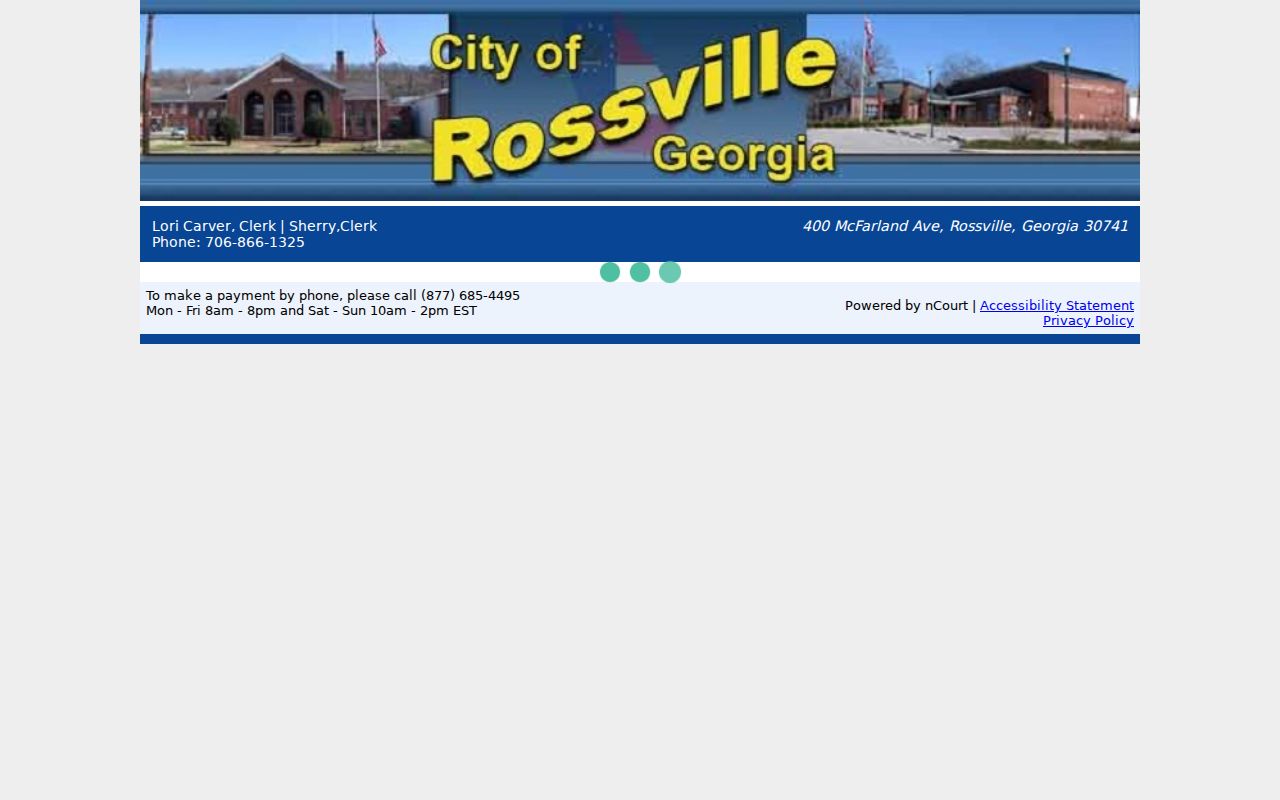
It is a municipal payment route, not a substitute for Walker Superior, State, or Magistrate civil dockets.