
How to Get Court Records
Start a Walker County court-record request with the court, case type, approximate date, case reference, and exact document. Superior and State Court records are managed by the Walker County Clerk of Superior Court. Search the official county route or account-gated PeachCourt first when useful. If a record is not visible, call 706-638-1742, visit the clerk counter at 103 South Duke Street in LaFayette, or ask how to send a mail request to P.O. Box 1125, LaFayette, GA 30728.
The county NextRequest portal and openrecords@walkerso.com serve county administrative records, but the county FAQ distinguishes court-file routing. Ask the clerk whether an item can be inspected, copied, certified, mailed, or picked up. No Walker-specific court-copy form or clerk email submission route was verified. Probate, Magistrate, Juvenile, and city records must go to their own custodians.
- Identify the court and record series, not just a person's name.
- Locate the case through the official Walker County search route when available.
- Choose online access, phone, counter, mail, or the proper county records request channel.
- Ask whether the requested item is public, scanned, indexed, and available for certification.
- Confirm fees, payment, postage, format, and timing before placing the order.
Walker Clerk Holds Three Courts
The GSCCCA Walker clerk profile identifies Carter Brown as Clerk of Superior Court and says the office manages Superior, State, and Juvenile files. County code 146 appears on the official profile. That does not make every Juvenile Court record public. It identifies the office structure, while juvenile law and court orders govern access.
The profile lists weekday hours from 9:00 a.m. to 5:00 p.m., phone 706-638-1742, and fax 706-638-1779. The clerk receives or maintains filings, indexes case events, records orders, prepares copies, and answers process questions. A clerk does not decide a legal issue or waive a hearing.
Review the official Walker clerk profile for current office details.
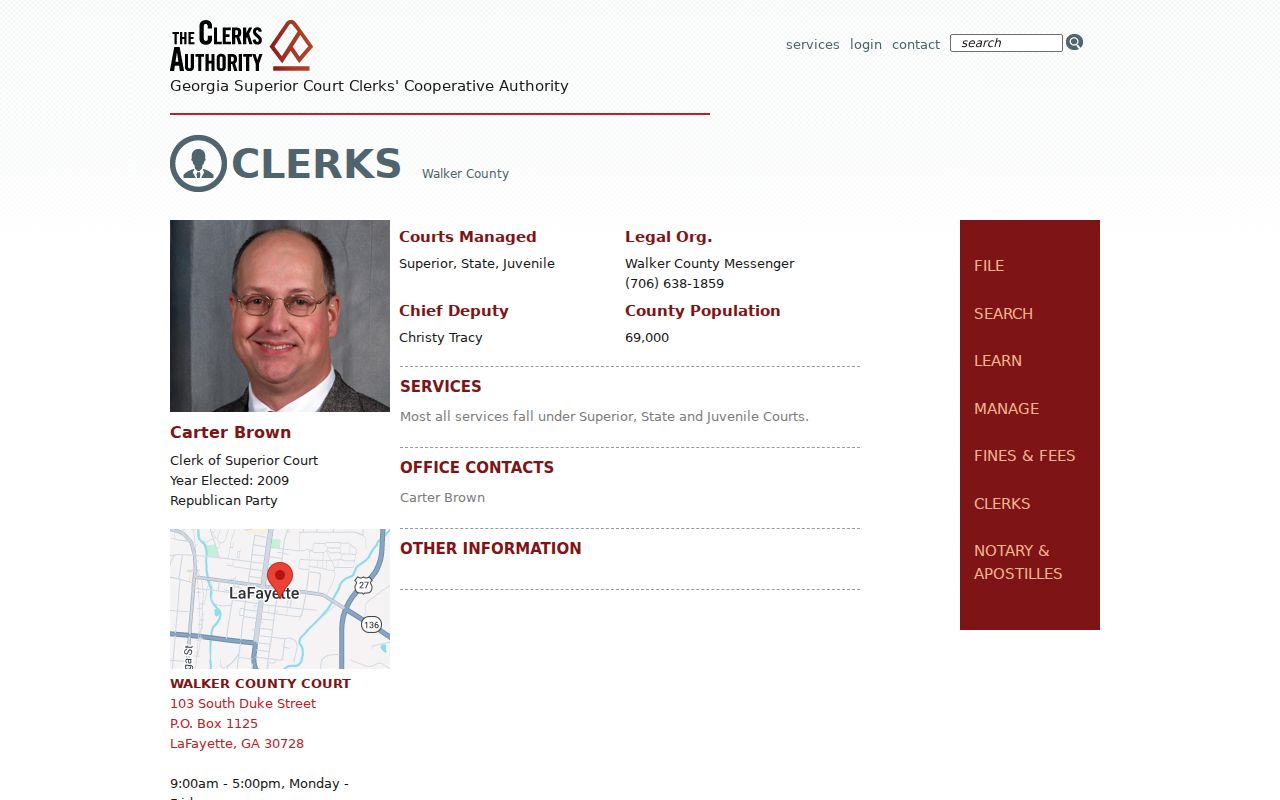
The profile image anchors the central records route while preserving the separate Probate, Magistrate, and city offices.
Types of Court Records
A Walker County docket is the chronological index. The underlying file can include pleadings, accusations or indictments, motions, affidavits, returns of service, exhibits, proposed orders, signed orders, judgments, sentencing papers, transcripts, calendars, financial reports, and clerk certifications. Not every item is scanned, public, current, or available from one portal.
- Superior and State docket sheets, filings, orders, and judgments
- Magistrate warrants, bond work, small claims, and listed county matters
- Probate estates, guardianships, conservatorships, and marriage certificates
- Municipal traffic, ordinance, code, and selected misdemeanor records
- Juvenile materials subject to court-order and statutory access limits
Walker Record Routing Splits
Divorce records belong with the Clerk of Superior Court, while marriage certificates follow Walker Probate Court. Probate is at 103 South Duke Street, Room 101, and lists 706-638-2852. Magistrate Court is at 201 South Duke Street and lists 706-638-1217. A separate online marriage-certificate service does not expose an entire probate docket.
City court records remain with the city. Rossville, for example, identifies its City Court Clerk and citation route on the municipal site. That local split is visible in the official source.
See the Rossville clerk's court-record route for the municipal-office distinction.
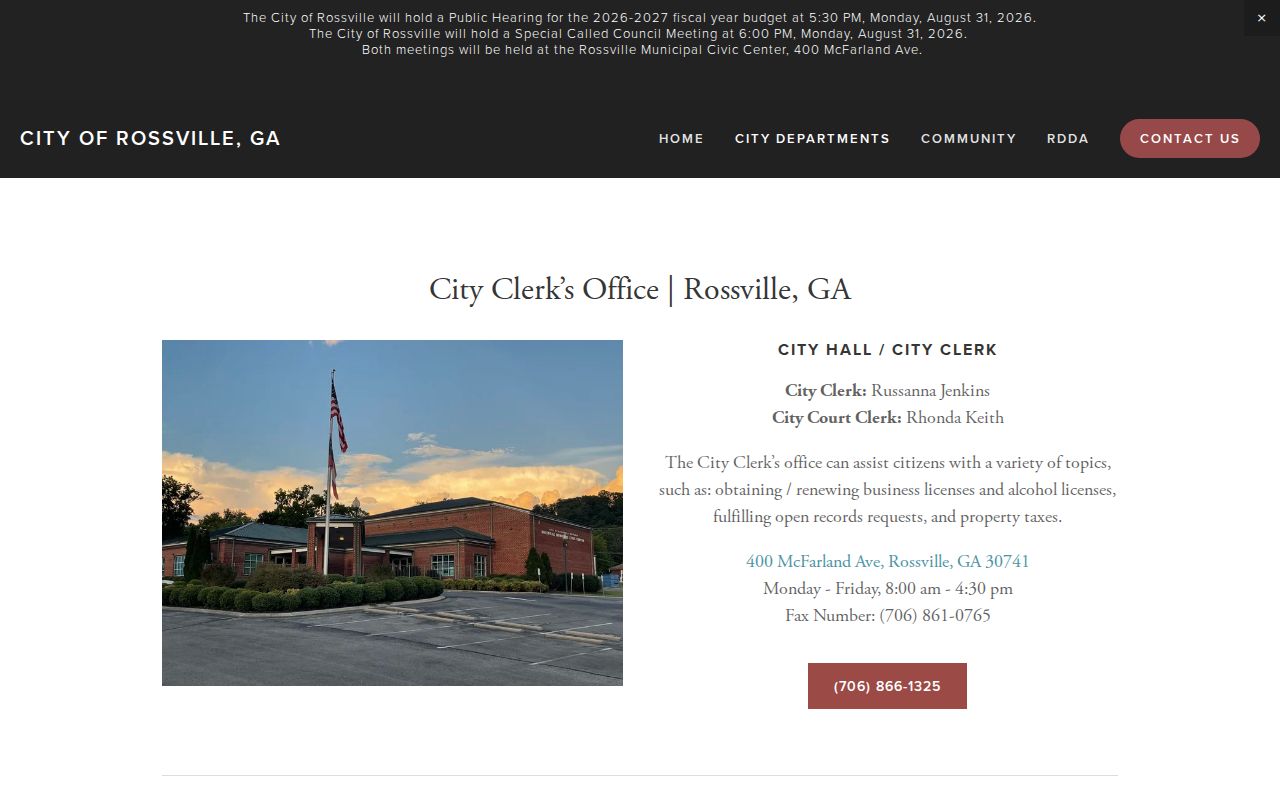
The city page demonstrates why a municipal file should not be requested from the Superior and State clerk by default.
What a Court Record Contains
A Walker County record may combine an index with selected document images. The case number identifies the file. The style names formal parties when public. Docket entries record filings and events in date order. Orders and judgments show signed court action. A calendar lists a scheduled setting but does not prove the hearing occurred. A transcript is a separate product and may require a court reporter rather than a routine clerk copy.
| Case number | The court identifier, distinct from a citation number. |
|---|---|
| Pleadings | Petitions, complaints, answers, motions, and responses. |
| Orders and judgments | Signed rulings and final or interim court action. |
| Docket sheet | The chronological filing and event index. |
| Exhibits | Filed attachments, subject to access and handling limits. |
A document can be filed but not yet indexed. Ask what is scanned, available for inspection, and eligible for a plain or certified copy.
Precise Walker Records Requests
A precise request saves time. Name the office, court, record series, date window, desired format, and exact item. For example, ask how to inspect a published Walker Superior Court calendar for a stated date or request the current clerk copy-fee schedule. Do not demand a broad personal file from the county portal when the Clerk of Superior Court is the proper custodian.
The Georgia Attorney General open-government FAQ explains public-record definitions, exemptions, and fee principles. Walker County says the first 15 minutes of search and retrieval are free for county open-records work, then a reasonable administrative charge may apply. It also lists general hard copies at ten cents per page unless another law controls. Those terms are not a verified court certification fee.
The state FAQ capture gives useful context for the county request channel.
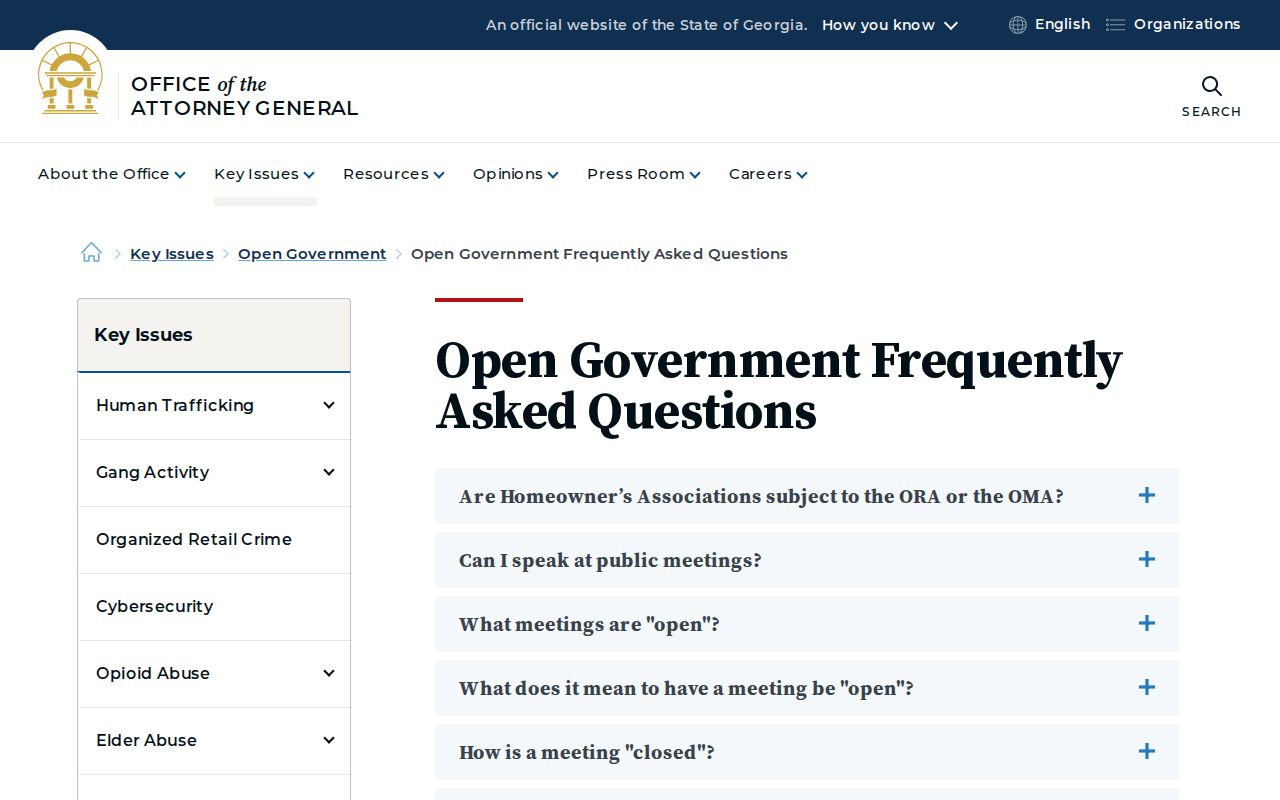
The source supports careful requests and exemptions, while court rules still govern sealed and restricted case material.
Certified Copies and Fees
A plain copy reproduces an available record. A certified copy adds the clerk's formal certification. Inspection may avoid a copy order when viewing is enough. Walker County research found no current court-copy form or verified court fee schedule, so do not apply the county's general ten-cent statement to certification, postage, transcripts, recording charges, or another fee fixed by law.
| Item | Amount |
|---|---|
| Inspection | Confirm availability and any research charge |
| Plain court copy | Current clerk fee not verified |
| Certified court copy | Confirm with the clerk before ordering |
| Postage or special format | Confirm method and amount |
Walker County Clerk of Superior Court
103 South Duke Street
LaFayette, GA 30728
706-638-1742
Walker eCertification Is Unconfirmed
The GSCCCA eCertification service offers account-based requests for participating counties. Walker was not listed on the participating-county page during the August 2026 inspection. That gap means no Walker County court record should be promised through eCertification without a fresh check.
Use the clerk's counter, mail, or phone for a certified-copy answer. Ask whether the document can be certified, how payment is accepted, whether a self-addressed envelope is needed, and how long fulfillment may take. The official clerk answer controls.
Public Access and Sealed Records
Uniform Superior Court Rule 21 governs access to court records, with remote electronic access limits in Rule 21.4. Public records can still contain redactions for Social Security numbers, protected birth-date information, medical or bank data, and other identifiers. Sealed portions, protective orders, confidential settlement material, and restricted family records may not appear online.
Juvenile records have stronger limits. If a Walker County result is sealed, confidential, restricted, or unavailable, ask the clerk what court process applies. A request under the Georgia Open Records Act cannot override a sealing order. Missing portal data is also not proof that the file does not exist.
Key access boundary: The Uniform Superior Court Rules control court-record access, privacy, sealing, and electronic limits. County open-records procedures do not displace those rules.
Walker Records Need File Checks
Online document availability can lag behind filing. A Walker County document may be accepted but not yet indexed, or the docket entry may be public while its image is restricted. Ask the clerk whether the original, scanned image, redacted copy, or certification is available.
This check matters for older and sensitive files. A portal is a useful index, not a promise that the complete court file is online. The clerk's answer identifies the official inspection or copy route.