
How to Search Walker County Dockets
The quickest start for a Walker County court docket is the Walker County courts directory. It sorts Superior and State Court apart from Magistrate, Probate, Juvenile, and the city courts. For Superior and State cases, the county clerk portal is the official local home. Georgia Courts E-Access sends Walker users to PeachCourt too. That route has a catch. PeachCourt needs an account, and some documents never surface there. Calendars help with dates. They are not a full docket, though. Gather the full party name, any case number you have, and the court type. Do that before you begin a docket search. Try spelling variations of a name. A single typo can hide the record you want.
- Identify Superior, State, Magistrate, Probate, Juvenile, municipal, or federal court.
- Open the official county route or the provider linked by that court.
- Search by the available name or case-number option and check the court label.
- Read entries and settings, then verify a date against the current calendar.
- Ask the responsible clerk to inspect the file or issue a certified copy.
Walker County Portal Routes
No single search box covers every Walker County court. The Lookout Mountain Judicial Circuit Walker page pulls together the county case search, calendars, State Court, Juvenile Court, and arraignment materials. For Superior and State files, Georgia Courts E-Access points to PeachCourt, which sits behind an account wall. Magistrate and Probate keep their own request desks. City tickets stay with the city that wrote them.
Access fallback: When an embedded portal is blank or blocked, use the circuit link, then call or visit the correct clerk with the case details.
What a Walker County Docket Shows
Think of a Walker County docket as a running index rather than the whole court file. It names the case, the parties, the attorneys, and the papers filed. It also tracks judicial events and the latest recorded outcome. Calendar reports add setting fields like date, time, judge, attorney, count, offense, or cause category. Remember what a label actually tells you. It records what was scheduled or filed, nothing more. An entry does not prove what happened outside it. A charge on the docket is not a conviction.
| Case Number | The court's unique identifier; preserve all letters and punctuation when requesting a file. |
|---|---|
| Parties | Named litigants or the State and defendant, subject to privacy limits. |
| Docket Entries | Filed pleadings, notices, motions, orders, returns, and judgments. |
| Hearing Settings | The date, time, event type, and sometimes judge or courtroom. |
| Court and Judge | The Walker County court responsible for the case and assigned judicial officer. |
| Disposition | The recorded resolution, which may differ by claim, charge, or party. |
Walker Calendars Are Not Dockets
The LMJC calendar index posts a Walker calendar. It also carries an administrator calendar and a PAC calendar. Current circuit materials carry labels such as arraignment, criminal calendar call, motions, pleas, civil jury, drug court, and probation or parole. These reports tell you when a group of matters may be heard. They do not show every filing. They do not establish a verdict either. That distinction matters when you rely on a docket search for a Walker County case.
Which Walker County Courts Keep Dockets
The case type decides which Walker County court keeps the docket. Superior Court holds general jurisdiction work. That includes felonies and major civil matters. State Court takes its assigned misdemeanor and civil caseload. Magistrate Court handles warrants, bonds, preliminary work, small civil claims, and listed county matters. Probate Court keeps estates, guardianships, conservatorships, licenses, and related records. Juvenile and municipal dockets sit with their own clerks and access rules.
| Court | Docket Covers | Where to Search |
|---|---|---|
| Superior and State | Felony, misdemeanor, and broad civil jurisdiction | Clerk portal, PeachCourt, or clerk counter |
| Magistrate | Warrants, preliminary matters, and small civil claims | Magistrate Court office |
| Probate | Estates, guardianship, conservatorship, and licenses | Probate Court office |
| Municipal | City traffic, ordinances, codes, and selected misdemeanors | Issuing city's court or clerk |
| Federal | Federal civil, criminal, and bankruptcy matters | PACER and the proper federal clerk |
Walker Clerk Access Channels
Walker County's Superior, State, and Juvenile court files all live in one office. That office is the Clerk of Superior Court. The GSCCCA clerk profile posts the county code, 146, plus phone numbers and public hours. Start a docket request online, at the counter, or by mail. Know what form you need. Inspection, a plain copy, and a certified copy are three different things. The clerk will ask which one. Whatever the route, give the court, the case number, the party names, and the document or date range you want.
Court records sit apart from other Walker County open records. The county's How Do I page draws that line clearly. A quick phone call can sort out routing questions. Before you mail anything, though, have the clerk confirm delivery methods, the current copy cost, and how payment must be made.
Finding Walker County Court Dates
Start with the Walker County court calendar. It points to the current circuit source and helps decode the event labels. Match the court, case number, party, event type, and report date. Read the labels with care. "Calendar call" is often just a scheduling event, not trial. "Arraignment" marks the plea-stage setting, and "motions" names a hearing category. None of those words states an outcome by itself.
Walker Docket Terms in Context
Short labels keep court calendars compact. Treat each term as a procedural marker, then check the linked entry or official file before drawing any conclusion about a Walker County case.
- Setting
- A scheduled court event, not a final result.
- Continuance
- An order moving a hearing or trial to a later time.
- Disposition
- The recorded resolution of a case, claim, or charge.
- Arraignment
- A criminal proceeding where charges and a plea are addressed.
- Calendar call
- A session used to review readiness or schedule matters.
Public Access to Walker County Dockets
Getting Georgia court records is not the same as an ordinary agency Open Records Act request. Uniform Superior Court Rule 21 governs inspection and copying of court records. Privacy and sealing rules shield some material too. The Georgia Attorney General open-government FAQ covers the Open Records Act. It also explains its fees and exemptions. The right path depends on who holds the record.
Key Rules:
Uniform Superior Court Rule 21 sets the court-record access framework and recognizes restricted material.
Georgia Open Records Act guidance explains response duties, lawful fees, and exemptions for covered agency records.
Georgia juvenile-record guidance describes why access to juvenile material may require court authority.
Restricted Walker County Records
Public access has its limits. Open to the public does not mean every field or document appears online. Sealed cases can be withheld or redacted. So can protected identifiers and sensitive filings. Juvenile proceedings run through a separate four-county court with stricter access rules. The Juvenile Court site says plainly that the public is excluded from video proceedings. A missing search result proves nothing about whether a case exists.
The Walker County Clerk and Dockets
Carter Brown is the Walker County clerk. That office keeps the records for Superior Court, State Court, and Juvenile Court. It is separate from Probate Court and Magistrate Court. It is also separate from the municipal clerks, the court administrator, and the State Court solicitor. Staff can help you find a file. They can explain copy options and certify a court document for you. What they cannot do is move a judge's setting or hand out legal advice.
Walker County Clerk of Superior Court
103 South Duke Street
LaFayette, GA 30728
706-638-1742
Walker Court Files and Copies
A docket lists activity; the case file holds the papers behind those entries. A plain copy just reproduces a document. A certified copy adds the clerk's official certification. Before buying every page, ask whether looking at the filing would do, and check with the clerk on whether it is scanned, counter-only, or subject to redaction.
| Need | Ask For |
|---|---|
| Track activity | Docket or case index |
| Read a filing | Named document and filing date |
| Official proof | Certified copy |
| Broad research | Inspection and a cost estimate |
Walker County does not appear on the GSCCCA list of counties offering eCertification. So treat digital certification as unavailable. Confirm the current copy and certification route with the clerk.
Walker Courthouse Records History
Walker County's records grew across eras. The trail runs from paper courthouse work to downloadable circuit calendars, embedded search pages, and now account-based electronic filing. The county history source traces how Walker County formed and how the courthouse story unfolded in LaFayette. The principal courthouse at 103 South Duke Street dates to 1917. County improvement materials describe restoration and access work there. That long physical trail explains something. No single modern portal holds every old filing, index, or docket entry. PeachCourt and GreenCourt now handle mandatory e-filing for Walker Superior and State Courts. E-filing is how authorized users send papers to the court. Public access is a separate matter. An account-gated provider may show an index or some documents. The clerk still holds the official Walker County court record.
Older material takes more digging. It may need an in-person index check, a phone call, or a written request with a useful date range. Keep a short source log for each Walker County record you touch. Note the court, the portal or office, the access date, the case identifier, and the latest setting shown. That habit helps you spot a changed calendar and tells the clerk exactly what to verify. It also keeps records distinct. A calendar report, a docket entry, a filed paper, and a certified copy stay separate.
Genealogy has another route. The county history source points to the Walker County Messenger archive, with issues published from 1880 through 1924. Newspapers can supply names and context. Still, they are a secondary source, and index spellings and dates vary across old volumes. Use the archive to narrow the hunt. Then ask the right Walker County clerk for the docket or filed record showing what the court actually recorded.
Federal Dockets for Walker Cases
Federal cases never show up in the Walker County court docket. Walker County falls under the Northern District of Georgia. Cases go to the court's Rome Division, at 600 East First Street in Rome. Federal docket research runs through PACER, which requires registration and may charge access fees. CourtListener's RECAP archive is a free lead. It is neither complete nor official. The Rome Division page itself posts location, hours, identification, and security guidance for visitors.
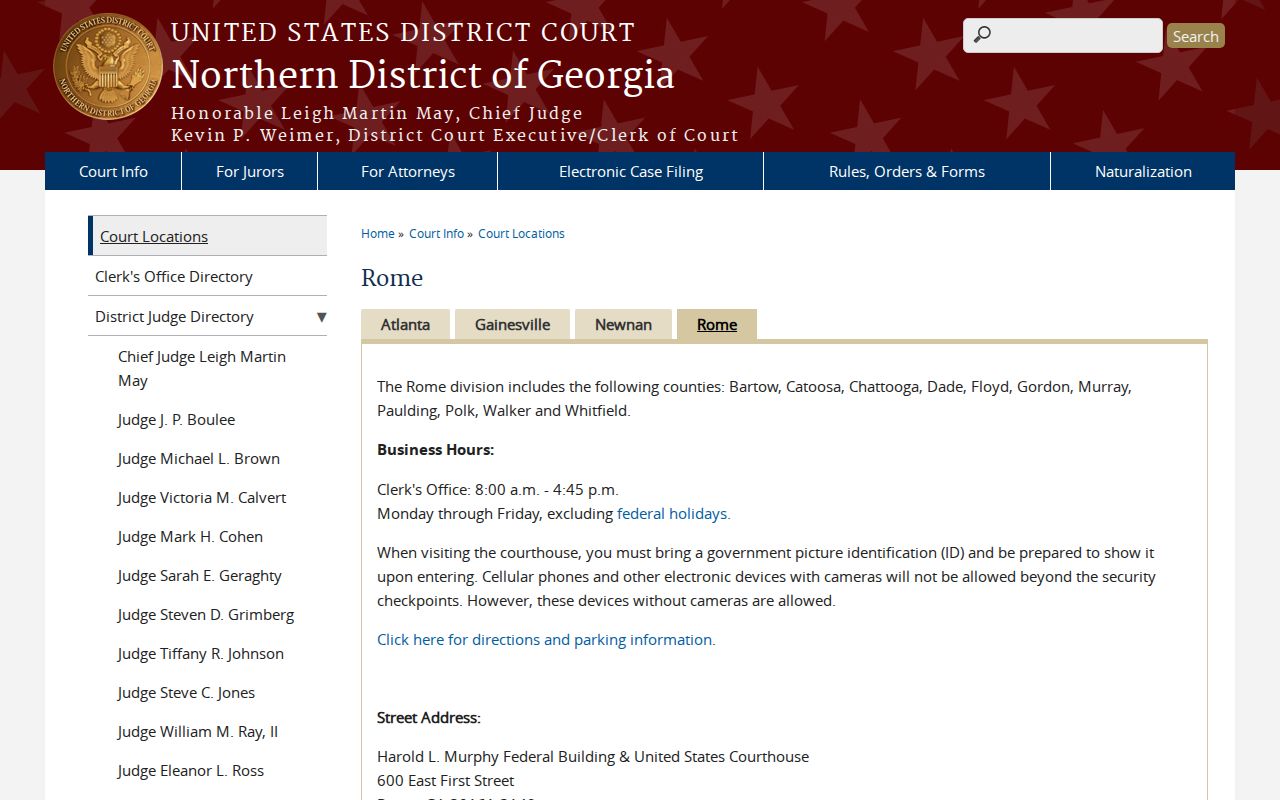
This view separates the federal clerk route from the Walker County courthouse and its local docket offices. PACER lays out its account and fee terms before any search begins.
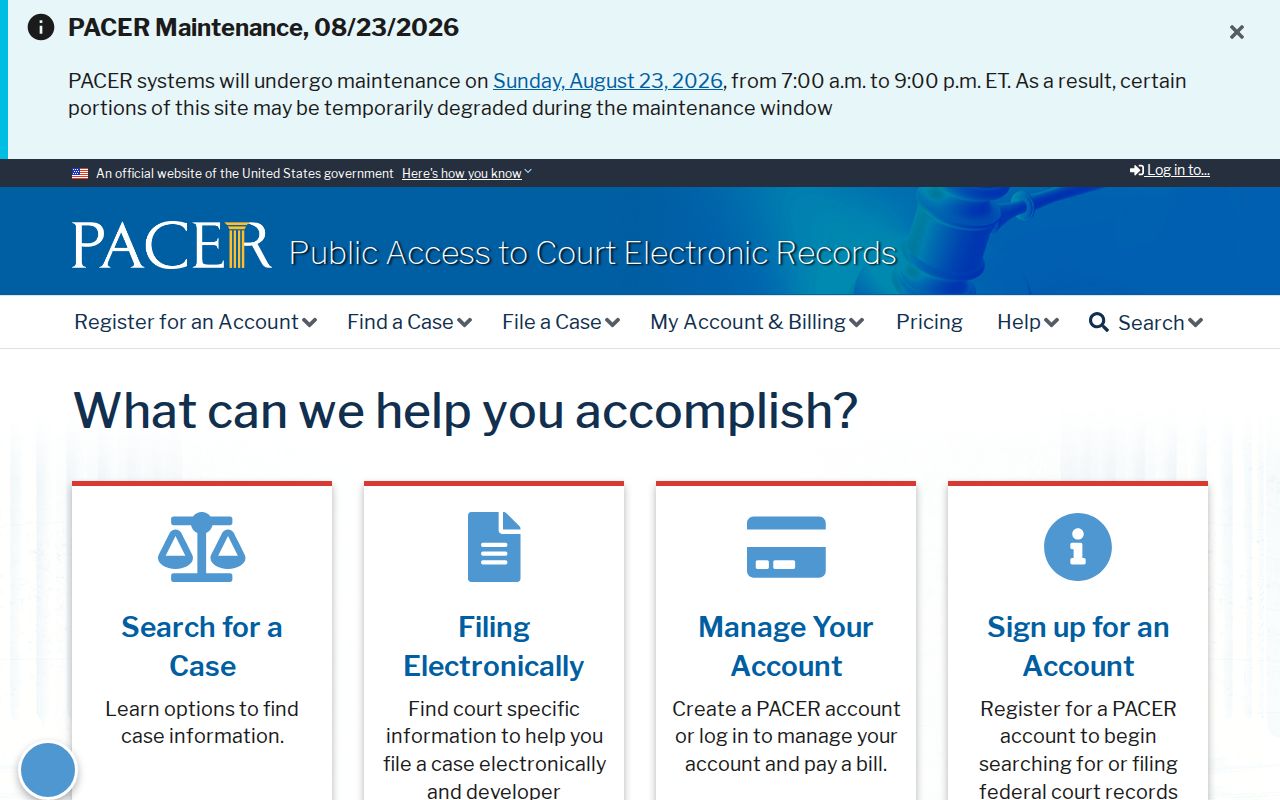
The PACER screen is a gateway to federal cases, not a Walker Superior or State Court search.
Court Dockets by City in Walker County
Municipal courts keep their own records. City traffic, ordinance, code, nuisance, and selected misdemeanor matters sit apart from the main Walker County docket. The 2020 Census ranks five incorporated cities, each with its own access path. Fort Oglethorpe offers the clearest public calendar. Rossville publishes a regular schedule. Chickamauga and Lookout Mountain link payment vendors with documented access limits. LaFayette calls for a City Hall fallback. Its visible online-services portal did not show court services. The Census incorporated-place table supports the city order used here.
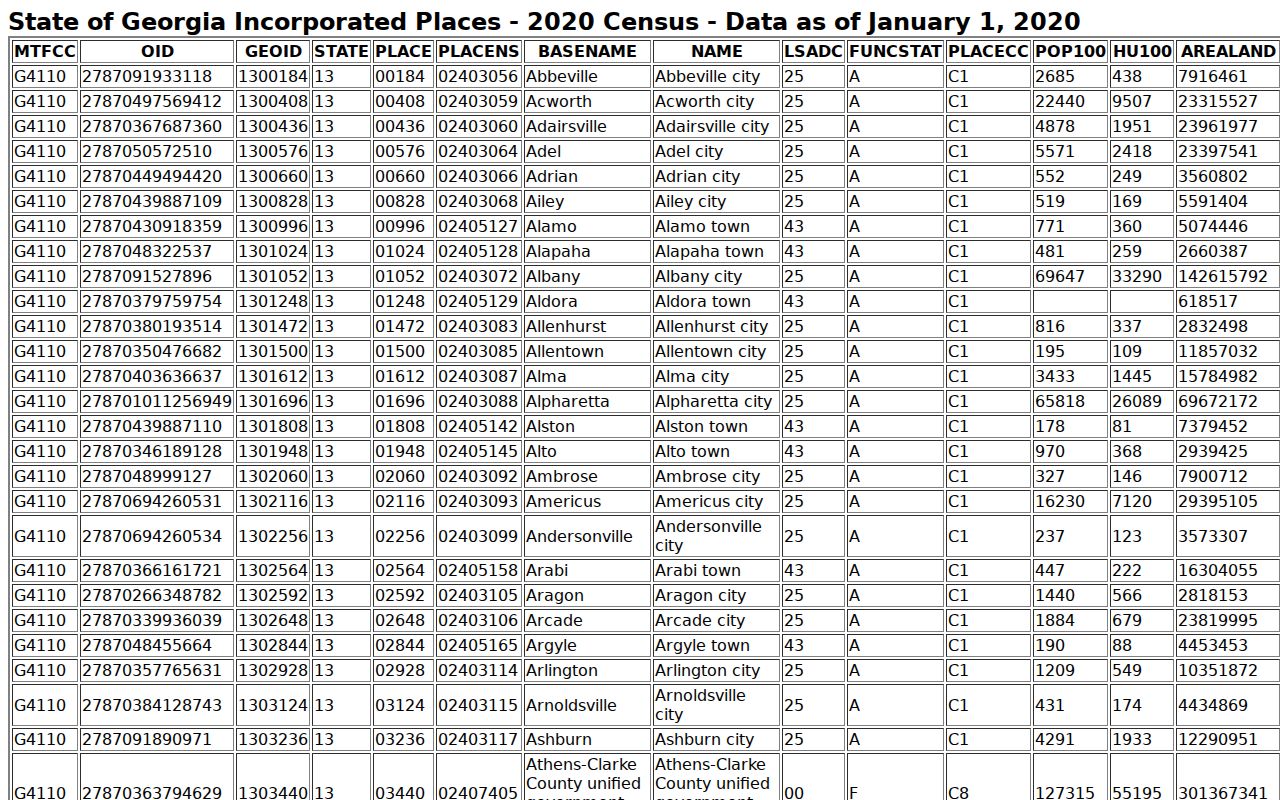
Population ranks select the city pages; they do not measure court filings or caseload.
Fort Oglethorpe Court Docket
10,423 · Public CourtWare calendar and several payment channels
LaFayette Court Docket
6,888 · City Hall and clerk fallback; no verified ticket portal
Rossville Court Docket
3,980 · First and third Tuesday court schedule and nCourt route
Chickamauga Court Docket
2,917 · City Hall fallback for a broken vendor link
Lookout Mountain Court Docket
1,641 · Published dates and City Hall confirmation route
Map and Directions to the Walker County Courthouse
Superior, State, and Juvenile Court records for Walker County are kept by Clerk Carter Brown at the Walker County Courthouse, 103 South Duke Street, in LaFayette. The courthouse building dates to 1917 and anchors the county seat, with Probate Court in the same building's Room 101 and Magistrate Court nearby at 201 South Duke Street.
Walker County Clerk of Superior Court
103 South Duke Street
LaFayette, GA 30728
706-638-1742
Monday through Friday, 9:00 a.m. to 5:00 p.m.
Building-wide public hours run 8:00 a.m. to 5:00 p.m. Monday through Friday, but the Clerk's counter and Probate Court (8:00 a.m. to 4:00 p.m.) keep their own separate hours, so call the specific office before a visit. Courthouse-improvement work added an ADA entrance ramp and main-entrance steps; no other parking or security policy is published, so confirm current entry procedures with the clerk.